
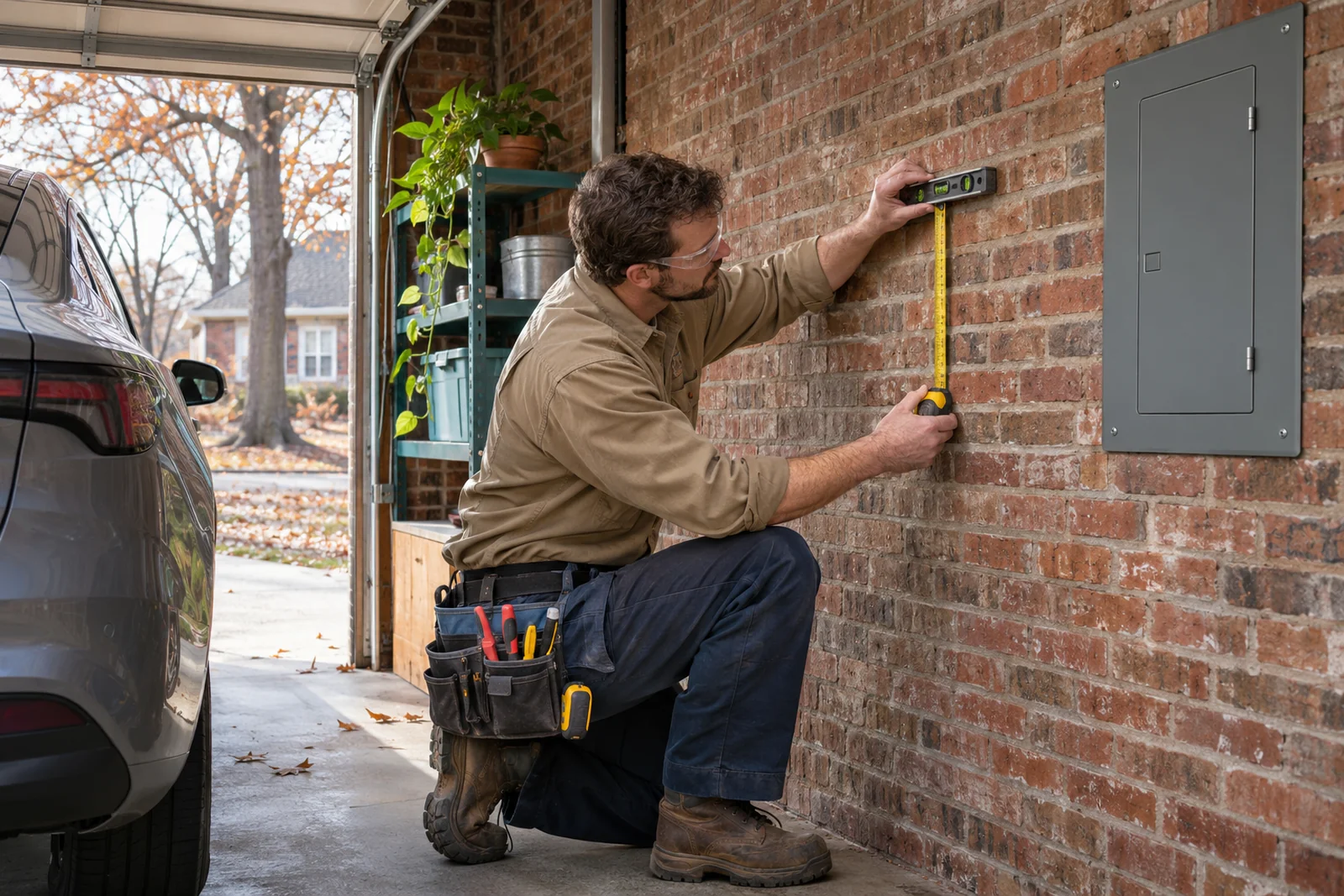
Before buying an electric-vehicle charger for a St. Louis home, bring three things into the same conversation: how you drive, where you park and what the property’s electrical system can support. A useful installation plan connects those details to a written scope.
This issue of Arch City Field Notes explains what to prepare for that discussion. The starting point is a qualified assessment of the actual property, followed by equipment selection and an agreed installation plan.
Start with the charging routine you need
Write down your usual daily mileage, the hours the vehicle is parked at home and whether another vehicle might eventually share the charging location. Include your vehicle’s make, model and manufacturer charging guidance. An occasional long journey and a regular daily commute can create different planning questions.
The U.S. Department of Energy describes home charging using AC Level 1 equipment and faster Level 2 equipment, with residential Level 2 using 240 volts. The appropriate setup depends on the vehicle, charging needs and property. Ask the electrician to explain the proposed option against your routine. Read the Department of Energy home-charging guidance.
Bring the whole property into the capacity review
Tell the electrical professional about equipment already in use and planned changes such as a heat pump, electric cooking or another vehicle. ENERGY STAR recommends discussing electrical service capacity and planned appliances with a licensed electrician when preparing a home for additional electric loads. Its electric-ready home guide provides a starting point for that conversation.
Ask what assessment supports the proposed charging capacity and whether any work is needed at the panel, service or circuit route. Have the electrician explain what can be confirmed now and what requires further investigation. Keep those findings with the proposal so the reason for each item is clear.
Walk the parking location with the installer
Describe where the car normally sits and which way it faces. Show the installer the charging-port location, garage-door movement, storage areas and the routes people use to enter the house. For a driveway installation, include the proposed mounting surface and how you use the space in wet weather.
Ameren recommends a qualified electrician’s site visit and discussion of charging type, installation location, required upgrades, permits, cost and timing. It also advises keeping charging cords out of walkways. Use its home-charging planning guide (PDF) to prepare questions for the visit.
Ask the installer to show the proposed cable reach and storage arrangement using your parking position. A garage that also stores tools, bicycles or bins needs that space considered in the layout. Resolve these details before a mounting location becomes part of the agreed scope.
Define the route and supporting construction
Ask how the proposed connection reaches the charging location and which walls, ceilings, exterior surfaces or paved areas may be affected. In a detached garage, have the contractor describe any work between buildings and who is responsible for restoring affected surfaces.
A useful proposal distinguishes electrical work from patching, painting, excavation or other supporting construction. Identify who coordinates each part and how an unexpected condition will be documented and priced. If a renovation is already planned, discuss the charging route while access and finishes are being considered together.
Confirm the equipment and approval steps
Record the exact equipment model being proposed and ask how it matches the vehicle, mounting environment and installation requirements. Bring the manufacturer’s documentation into the review before ordering equipment. If you are supplying the charger yourself, confirm the contractor’s responsibility for checking suitability and the process for resolving a mismatch.
The Department of Energy advises that installations comply with applicable local and state requirements and that permits may be required. Ask which jurisdiction handles your property, which approvals apply and who submits the paperwork. Confirm any utility coordination and inspection steps in the written schedule.
Compare the full installation proposal
Use the same information when requesting and reviewing proposals. This makes differences in the work easier to understand. Ask each contractor to identify the following items.
- The vehicle, charging equipment and planned operating arrangement.
- The assessed electrical capacity and any proposed changes.
- The mounting location, connection route and cable-storage plan.
- Equipment supply, installation and setup responsibilities.
- Permit, utility-coordination and inspection responsibilities.
- Any patching, excavation, surface restoration or other trade work.
- The total price, exclusions and process for approving additional work.
- Completion records, operating instructions and written warranty terms.
Before approving a proposal, ask about any item described only as “as needed” or “by others.” Have the contractor explain how that item affects the price, sequence and handoff. Save the agreed documents with the equipment information for future service.
Prepare a clear first conversation
A useful initial brief contains your property location, parking arrangement, vehicle details, normal charging window and any other electrical changes being considered. Add photographs of the parking area and accessible exterior equipment surfaces, taken from safe locations. Leave equipment covers closed and arrange technical inspection with the appropriate professional.
Explore EV charging project planning and electrical services, then request a consultation to discuss your property, timing and next step.
About this issue
Arch City Field Notes, issue 02. Published November 24, 2026. Primary sources checked on that date. This article provides general project-planning information. Equipment instructions, applicable requirements and a qualified property assessment guide the actual work. The accompanying photograph is an AI-generated illustrative planning scene.