
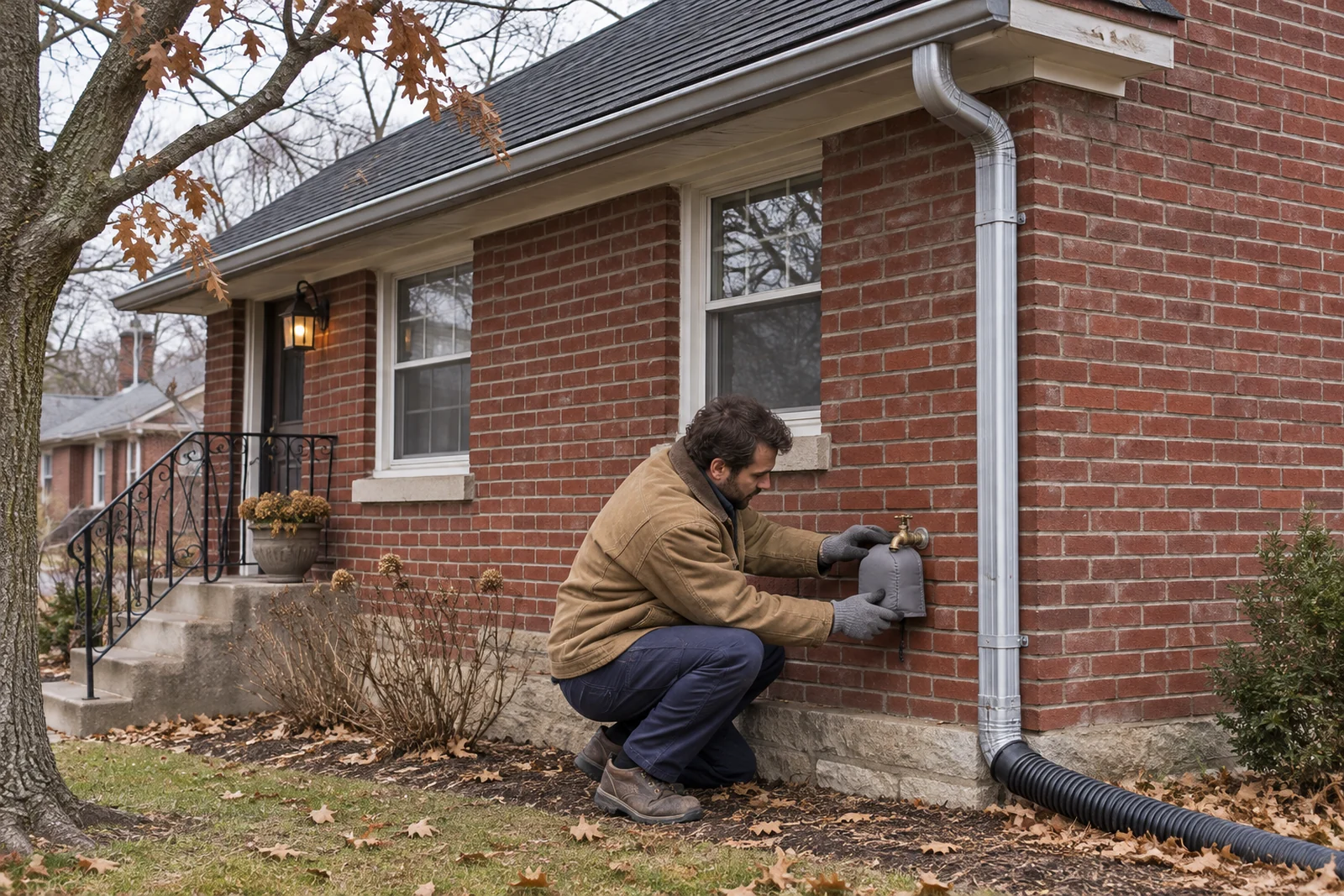
November is a useful moment to bring a property’s small maintenance questions into one plan. A downspout that has moved, an outdoor faucet with no winter preparation, and a heating system with an uncertain service history belong on the same list—even when different trades will handle the work.
This first issue of Arch City Field Notes is a planning walkthrough for Greater St. Louis homeowners and property managers. Start with what you can observe safely, keep a dated record, and use that record to ask for a specific scope. The goal is a useful handoff rather than a long list of assumptions about what needs replacing.
Start with a simple property record
Make one note for the property, with the address, date, areas checked and anything you could not access. Take an overall photograph before a close detail so someone reviewing the record can understand the location. Describe the observation plainly: “water marks below the rear window” is more useful than deciding, without an inspection, that the entire wall has failed.
For an occupied rental or commercial space, add access arrangements, the responsible contact and any hours when work would interrupt occupants. Keep private tenant information out of photos you share. This turns a casual walkthrough into a practical starting point for a site visit.
Look at the roof and drainage from the ground
Choose a dry, well-lit time and keep both feet on the ground. Look for visibly displaced roofing, gutters pulling away from the edge, disconnected downspouts and debris you can see at drainage outlets. Record the location of staining, overflow marks or recurring puddles. A photograph can raise a question; it cannot establish the condition of concealed decking, flashing or roof layers.
Do not climb onto a roof or reach from a ladder for this walkthrough. Ask a qualified roofing professional to evaluate inaccessible areas and active leaks. If drainage and roofing concerns occur together, ask for the proposed connection between them to be explained before approving separate repairs.
Our roofing guide and gutter, fascia and soffit page explain the project questions to bring to that conversation. If replacement is being considered, a preliminary online range is a planning aid; a written scope still needs the property’s actual conditions.
Make an outdoor plumbing plan before freezing weather
The American Red Cross recommends removing, draining and storing outdoor hoses, preparing outdoor supply lines according to the manufacturer’s or installer’s directions, and identifying water pipes in unheated spaces or poorly insulated exterior walls. Outdoor fixtures and shutoff arrangements differ, so confirm the procedure for your property rather than assuming a faucet cover is the entire solution. See the Red Cross frozen-pipe preparation guide.
Record which shutoff serves each area and ask a qualified plumber about fittings you cannot identify, existing leaks or exposed piping. For a larger property, make the location record available to the person responsible for access. The plumbing service page can help organize a coordinated review.
Check the heating maintenance record
Find the equipment model, the last service record and the correct filter instructions before buying replacement parts. ENERGY STAR recommends checking filters monthly and arranging heating-system maintenance in the fall. Follow the equipment manufacturer’s requirements for filter type and maintenance; a dirty filter is a reason to check the system, not evidence that replacement is necessary. Read the ENERGY STAR maintenance checklist.
Write down rooms that heat unevenly, unusual operation and access constraints. Give those observations to the technician instead of requesting a particular replacement size on guesswork. Visit heating and cooling for the questions that help define a system review.
Include carbon monoxide protection in the handoff
The U.S. Consumer Product Safety Commission recommends professional inspection and service of heating systems annually, including checks of chimneys and flues. It also recommends carbon monoxide alarms on every level and outside sleeping areas, installed and maintained according to the manufacturer’s instructions. Alarms support safe appliance use and upkeep; they do not replace them. See the CPSC carbon monoxide fact sheet.
If a CO alarm sounds, leave for fresh air, call emergency services and wait for responders’ permission before re-entering. That is an emergency response, separate from a routine project request.
Turn the list into an agreed next step
Sort your notes into three groups: an issue needing prompt professional attention, routine seasonal maintenance, and an improvement to price later. Ask the contractor to confirm the observations, identify what still needs investigation, and describe inclusions, exclusions, access and cleanup in writing. If several trades are involved, ask who owns the handoff between them.
Keep the original notes with the resulting scope and service records. Next season, you will have something concrete to compare rather than starting over. To discuss a coordinated property project, request a consultation with Arch City Builders and share the location, observations and timing that matter to you.
About this issue
Arch City Field Notes, issue 01. Published November 5, 2026. The primary-source guidance linked above was checked on that date. This is general property-planning information; equipment instructions and a qualified assessment of the actual building govern the work. The accompanying generated photograph is an illustrative maintenance scene, not a completed Arch City customer project.